
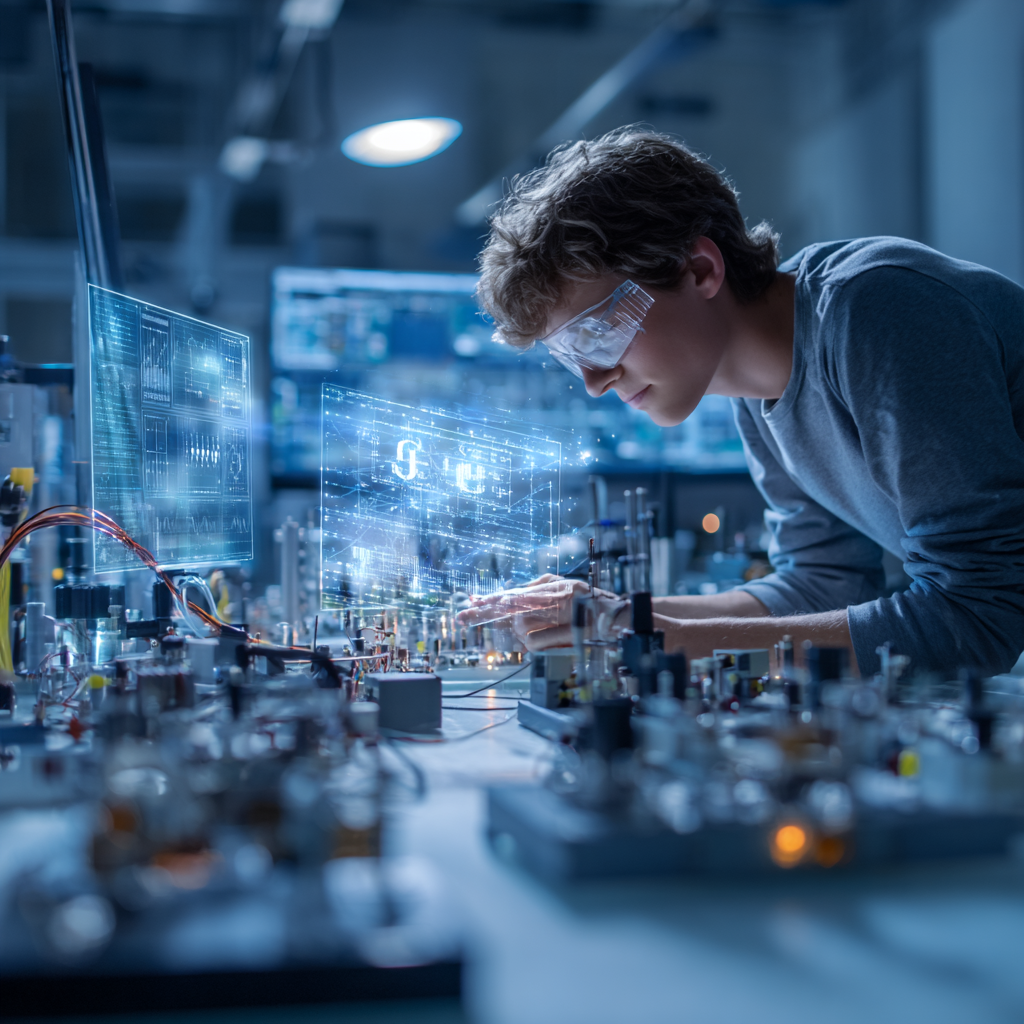
For decades, engineering education was built around physical access: access to laboratories, circuit boards, oscilloscopes, robotics kits, embedded systems, testing benches, sensors, microcontrollers, and expensive industrial equipment. A student could understand theory from textbooks, but real engineering confidence usually came from touching hardware, breaking small systems, measuring signals, debugging errors, and seeing how imperfect the physical world can be.
That model still matters, but it is no longer equally available to everyone. Many students study in institutions with limited budgets. Others learn remotely, attend online programs, live far from university labs, or cannot afford personal hardware kits. In computer engineering especially, the gap between theory and practice can become serious when students are expected to understand systems they rarely get to test directly. This is one reason simulation tools are becoming so important. They are not replacing real laboratories completely, but they are increasingly becoming the first practical engineering environment for students who would otherwise have almost no hands-on experience at all.
Simulation software gives students a way to build, test, fail, repeat, and understand technical systems without needing full access to physical equipment. For computer engineering, this can include circuit simulators, processor architecture tools, network simulation platforms, embedded systems environments, robotics simulators, digital logic tools, cloud-based labs, and virtual machines. The student may not be holding the hardware, but they are still learning how systems behave, how components interact, and how small design decisions can create larger technical consequences.
The Lab Access Problem in Modern Engineering Education
The cost of engineering education has quietly become one of the biggest barriers to practical learning. A well-equipped laboratory is expensive to build and even more expensive to maintain. Equipment becomes outdated, components break, safety rules limit usage, and class sizes often exceed available lab capacity. Even when a university has strong facilities, students may only get limited time with the equipment.
This creates an uneven learning experience. Some students spend hours working with boards, sensors, measurement tools, and lab instructors. Others complete most of their education through lectures, assignments, and theoretical exercises. The difference becomes visible later, when graduates enter internships or engineering jobs and suddenly face systems that behave less cleanly than classroom examples.
Simulation tools help reduce that gap. They allow students to practice outside scheduled lab hours and repeat experiments as many times as necessary. A student can simulate a circuit at midnight, test different logic gates before class, configure a virtual network, or experiment with memory management without waiting for physical access to a university lab.
This flexibility is especially important for remote learners and students in developing regions. A laptop and internet connection cannot fully replace a professional engineering lab, but they can provide access to meaningful technical practice that would otherwise be impossible.
Why Computer Engineering Fits Simulation So Well
Computer engineering sits at an interesting point between hardware and software. Students need to understand code, circuits, processors, operating systems, networks, and embedded devices. Much of this knowledge can be modeled digitally with surprising effectiveness.
A digital logic simulator can help students understand gates, flip-flops, multiplexers, counters, and state machines before they ever touch an FPGA board. A microcontroller simulator can show how code interacts with registers, timers, interrupts, and memory. Network simulation tools can demonstrate packet routing, latency, congestion, and security behavior without requiring a room full of routers and switches.
This is not just a cheaper version of the real thing. In some cases, simulation actually improves early-stage learning because it makes invisible processes visible. Students can slow down execution, inspect internal states, pause a system, change variables instantly, and observe cause-and-effect relationships that are difficult to see in physical hardware.
For beginners, that visibility is powerful. Real hardware often fails for reasons that are hard to isolate: bad wiring, damaged components, unstable power, poor soldering, driver issues, or configuration mistakes. These problems are important to learn eventually, but they can overwhelm students who have not yet understood the underlying concept. Simulation provides a controlled environment where the logic of the system becomes clearer before physical complexity enters the picture.
The Rise of Virtual Labs and Cloud-Based Engineering Tools
One of the most important developments is the growth of cloud-based engineering environments. Students no longer always need high-performance local machines or specialized lab computers. Many simulation platforms now run through browsers, remote desktops, or cloud infrastructure.
This changes the economics of engineering education. A university can offer virtual lab access to hundreds of students without needing equivalent physical hardware for each person. Students can work from home, repeat exercises, share results with instructors, and collaborate across locations.
Cloud-based labs are also useful for teaching cybersecurity, operating systems, distributed computing, and networking. Instead of risking damage to real infrastructure, students can work inside isolated virtual environments. They can misconfigure systems, test attacks, analyze logs, and restore environments quickly. Failure becomes safer, cheaper, and more educational.
For computer engineering students, this repeated cycle of testing and correction is essential. Engineering is not learned only by getting the right answer. It is learned by seeing why wrong designs fail.
The Risk of Simulation-Only Thinking
Still, simulation tools have limits. A student who learns only in virtual environments may develop an overly clean understanding of engineering. Simulated systems behave according to models. Real systems behave according to physics, manufacturing variation, thermal conditions, electrical noise, aging components, imperfect connections, and human error.
This is a serious issue. A circuit that works perfectly in a simulator may fail on a breadboard. A network design that looks stable in software may encounter real-world latency, hardware limitations, or unpredictable traffic. Embedded code that runs well in a simulated environment may behave differently when sensors return noisy values or power conditions fluctuate.
That is why simulation should not be presented as a complete replacement for hardware. It is better understood as a bridge. It prepares students to make better use of limited physical lab time. When students finally reach real equipment, they arrive with stronger conceptual understanding and more confidence.
The ideal model is not “virtual instead of physical.” It is “virtual before physical.”
How Simulation Changes the Role of the Instructor
Simulation tools also change how engineering instructors teach. Instead of spending most of the lab session helping students fix basic setup problems, instructors can assign exploratory work before students enter the physical lab. Students arrive having already tested the logic of their design and identified possible weaknesses.
This allows classroom time to focus on deeper engineering questions: Why does the real system differ from the simulation? Which assumptions failed? What variables were ignored? How should the model be improved? These are the questions that build real engineering judgment.
Instructors can also use simulation data to understand how students learn. If many students make the same design mistake in a virtual lab, the teacher can address that misconception before it becomes a repeated hardware problem.
A More Accessible Future for Engineering Education
The growing role of simulation tools reflects a broader shift in engineering education. Practical learning can no longer depend only on access to expensive physical infrastructure. Students need flexible environments where they can experiment continuously, especially in fields that evolve as quickly as computer engineering.
Simulation tools make engineering education more accessible, more repeatable, and more forgiving. They allow students to practice without fear of damaging equipment, to revisit difficult concepts, and to build confidence before facing real hardware. At the same time, they remind educators to design programs carefully, so that virtual success does not replace physical understanding.
The engineering lab of the future will likely be hybrid. It will combine real equipment with virtual systems, cloud platforms, digital twins, remote labs, and simulation environments. For students without access to expensive hardware, this shift is not a minor convenience. It may be the difference between studying engineering as abstract theory and experiencing it as a practical discipline.