
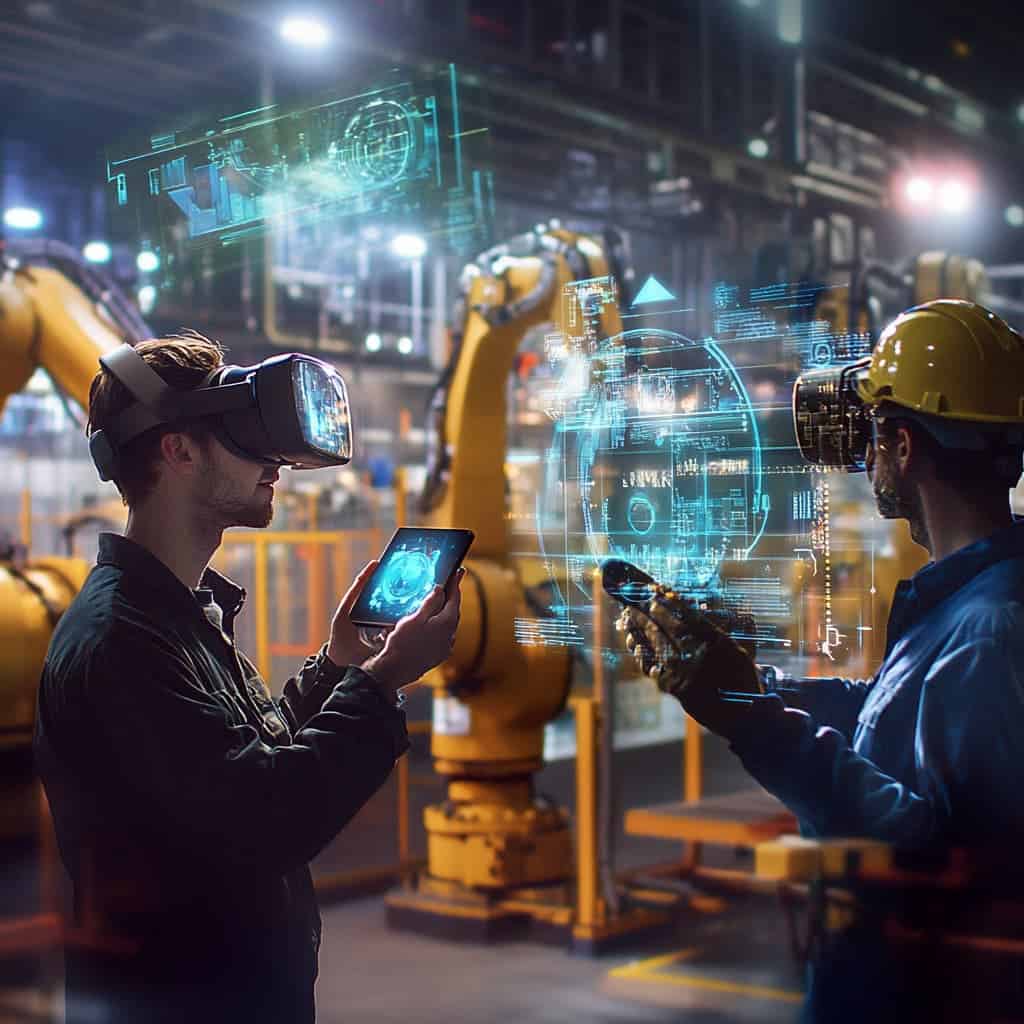
Augmented reality (AR) is no longer just a futuristic concept—it’s becoming a practical tool that is reshaping how engineers learn, work, and interact with complex systems. As digital transformation accelerates across industries, AR offers a fresh perspective on visualizing data, prototyping ideas, and collaborating across distances.
In engineering, where precision and visualization are essential, AR enhances traditional methods by blending the digital and physical worlds.
What AR Brings to the Table
AR overlays digital elements—like 3D models, measurements, and animations—onto the real environment through smart glasses, mobile apps, or tablets. For engineers, this capability allows for a more intuitive exploration of complex structures, systems, and designs.
In contrast to simulations viewed on flat screens, AR enables users to interact with spatial data in real-world context, improving both understanding and decision-making.
Transforming Engineering Education
Engineering education has historically relied on lectures, textbooks, and computer-based simulations. AR introduces a new dimension—interactive, hands-on experiences that can deepen learning.
For example, students studying mechanical systems can use AR to examine a rotating engine, seeing inside it as it operates. Structural engineering students can walk around virtual bridges, exploring forces and stress points with visual cues.
This interactive learning supports multiple styles of understanding and helps reduce the gap between theoretical knowledge and practical skills.
Hands-On Practice Without the Lab
Not all institutions can afford fully equipped laboratories, and remote learners may lack access to physical resources. AR helps by simulating lab environments where students can test circuits, assemble components, or troubleshoot problems in a risk-free space.
These simulations are especially useful in fields such as electrical, civil, and chemical engineering, where material costs or safety concerns can limit hands-on experience.
Collaboration in a Shared Virtual Space
Team-based projects are central to engineering. AR platforms now support real-time interaction with shared models, letting users collaborate on designs even when located in different places.
Whether adjusting the layout of a machine or reviewing architectural plans, AR makes remote teamwork more immersive and efficient, enabling clearer communication of ideas and changes.
From Design to Deployment
In professional practice, AR is used to improve design workflows and reduce costly mistakes. Engineers can preview how a machine or product fits into a real environment, check for conflicts or interference, and make modifications early in the process.
Instead of relying solely on 2D plans or digital renderings, AR lets teams place virtual components into physical spaces to test functionality and aesthetics before manufacturing begins.
Maintenance and Field Support
For engineers working in the field—whether on construction sites, factories, or infrastructure—AR provides immediate access to schematics, instructions, and diagnostics.
Smart glasses or tablets can display relevant data overlaid on equipment, guiding technicians through repair steps or installation procedures. This reduces downtime, minimizes errors, and helps less experienced staff complete complex tasks with confidence.
Architecture and Civil Engineering Benefits
In large-scale projects, AR is used to visualize infrastructure on location before construction begins. Civil engineers can project roadways, tunnels, or utilities onto landscapes, identifying spatial conflicts and communicating plans to stakeholders in a clearer way.
This also aids urban planning and ensures better alignment between design intent and real-world conditions.
Industry Use Cases
Many engineering sectors have started to integrate AR:
- Manufacturing: Operators use AR to guide them through assembly procedures.
- Aerospace: AR helps engineers inspect complex systems without dismantling them.
- Energy: Utility companies use AR to monitor and manage grid components on-site.
These examples highlight AR’s growing value as a problem-solving and productivity-enhancing tool.
Challenges and Considerations
Despite its promise, AR adoption comes with challenges:
- Hardware costs: AR headsets and advanced devices remain expensive for many institutions.
- Training needs: Engineers and students require time to learn AR platforms and integrate them into workflows.
- Content development: Creating realistic 3D models and simulations is resource-intensive.
- System integration: Compatibility with existing design software and data formats is still evolving.
As AR tools become more accessible and standardized, these barriers are expected to decrease.
What’s Next for AR in Engineering?
Future developments may include AR powered by AI and machine learning, making the systems more responsive to users’ actions and needs. Integration with sensors and IoT devices could create real-time feedback loops, offering engineers immediate insights into performance or failure points.
Educational institutions are also likely to embrace AR more deeply, particularly in hybrid and remote learning environments.
Conclusion
Augmented reality is adding a new layer to how engineering is learned and practiced. By visualizing information in the real world, it improves comprehension, streamlines design, and supports field operations in a more efficient and engaging way.
As AR continues to mature, it may soon become as essential to engineers as CAD software or 3D printing—ushering in an era where technical understanding is enhanced not just by numbers and drawings, but by immersive, hands-on experiences.