
Today, when we launch a mobile application, visit a website, or even play at an online casino, we rarely think about the complex journey behind the creation of a comprehensible communication language between humans and machines. The first attempts to teach computers to “understand” instructions became one of the greatest milestones in the history of technology. Without these fundamental breakthroughs, there would be no modern digital entertainment or convenient services we have grown so accustomed to.
From Mechanical Machines to Programmable Devices
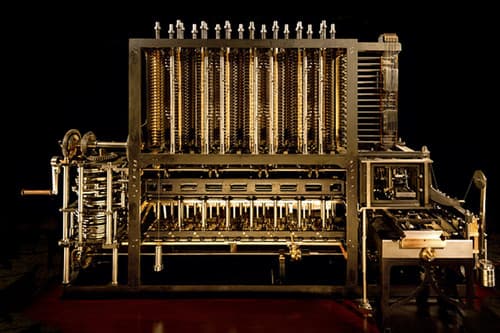
The history of programming began long before the emergence of the first computers. As early as the 19th century, Charles Babbage envisioned the “Analytical Engine” — a mechanical device that could be programmed using punched cards. His colleague, Ada Lovelace, wrote the first-ever program for this machine, although the device itself was never fully constructed. Nevertheless, her work laid the foundation for future programming.
In practice, the first real experience of programming appeared only in the mid-20th century. In the 1940s, with the development of computers like ENIAC and EDVAC, engineers faced the necessity of formalizing instructions that machines could execute. It became a major challenge: they had to create something resembling a new “language” of communication — not human, but not purely mechanical either.
Machine Code and Assemblers: Speaking in Zeros and Ones
The earliest computers could only understand machine code — sequences of zeros and ones that directly controlled the processor. For engineers, it was like trying to write entire novels using Morse code: slow, complex, and extremely prone to errors. A single typo could lead to critical failures in a program’s operation.
To simplify the process, developers invented assemblers — programs that translated more readable commands into machine code. Thus, the first mnemonic codes such as MOV, ADD, and SUB appeared, significantly facilitating the writing of instructions. However, even assemblers remained difficult for non-specialists to grasp.
Interestingly, modern online entertainment, including online casinos, still fundamentally relies on principles established during that era: any gaming slot or virtual roulette table is, at its core, a series of instructions translated into machine code understandable by the processor. Modern developers simply work with higher-level languages now — something you can experience by visiting a site like kaszinomagyar.net, which features top-tier gaming platforms offering generous bonus programs and a wide range of games from the world’s leading providers.
The Birth of the First High-Level Languages
In the 1950s, engineers realized that to make computing technology more widespread, they needed languages more similar to human language. Thus, FORTRAN (“Formula Translator”) was born, created by an IBM team led by John Backus. FORTRAN allowed mathematical operations to be described in near-natural language, making programming much faster and easier.
Around the same time, the COBOL language emerged, targeting business applications. Its goal was to be as understandable as possible for people without technical education — accountants, managers, economists.
The creation of these languages triggered a true revolution. Now, not only electrical engineers but also specialists from other fields could write programs. Broadening the circle of users contributed to the explosive growth of computing systems, their adoption in banking, transportation, manufacturing, and later — in the entertainment industry.
The Evolution of Languages and Their Impact on Modernity
With each decade, programming languages became more convenient and powerful. Iconic developments such as Pascal, C, later C++, and Java appeared, forming the foundation for most modern applications. Today, when visiting an online casino website or using a mobile betting application, we are actually interacting with multi-level structures based on these languages: from high-level user interfaces to low-level request processing logic.
Moreover, so-called scripting languages like JavaScript, Python, and PHP began to play an important role. They allowed the creation of more dynamic and interactive platforms, ensuring a modern level of user comfort. Once again, we see that even in entertainment products — from social networks to gaming machines — the principles developed decades ago are still embedded.
What We Learned from the First Steps of Programming
The first programming languages taught engineers several vital lessons: how to make instructions understandable for machines, how to avoid errors, and how to systematize data processing. These skills laid the foundation for the digital era we live in today.
From the first punched cards to cloud technologies, less than a century has passed, but the journey has been incredibly eventful. And looking at how modern online services and entertainment are developing, it’s safe to say: the principles laid down by the first programmers remain highly relevant — only the forms of their embodiment are becoming more elegant and increasingly invisible to the user.